2026 Top Beer Glasses for Global Buyers?

Time:2026-11-01 Author:Sienna
0%

Choosing Beer Glasses for international markets is not simply a matter of appearance. Buyers need to balance serving style, durability, price, and the expectations of local customers. A sturdy pint glass may suit a busy pub, while a tulip-shaped glass can better present certain aromatic beers. Neither shape is right for every buyer. It depends on how the glass will be used, washed, stored, and shipped.

Small details matter. Rim thickness affects the feel of a sip. A broad, stable base can help reduce tipping on crowded tables. Capacity should match the intended serving size, while weight and stackability matter during handling and storage. In this guide, we compare popular glass styles and outline practical checks for evaluating suppliers, including product specifications, sample quality, packaging, and consistency between orders. Ask for clear details. A photograph alone cannot confirm finish or weight.

Global sourcing also brings trade-offs. A lower unit price may not mean better overall value if breakage, packaging, or freight costs are overlooked. Buyers should verify specifications and confirm that samples match the final order. Claims about dishwasher performance or customization are worth checking with the supplier rather than assuming. This guide offers a starting point, not a universal ranking: the best choice depends on your venue, customers, budget, and supply needs. Even careful comparisons can miss something. That is a reason to review the details before committing.
2026 Top Beer Glasses for Global Buyers?

Beer Glasses: Definition, Purpose, and Main Types

Beer glasses are purpose-built vessels designed to present, smell, and drink beer more effectively. Their shape influences foam, aroma, temperature, and how liquid reaches the tongue. A glass is not merely decoration. In practical tasting sessions, I have noticed that a narrow rim holds carbonation longer, while a wider bowl releases stronger malt and hop aromas. These effects depend on beer style, pouring speed, cleanliness, and serving temperature. A cloudy film or detergent scent can distort an otherwise careful evaluation. That detail is easy to miss.

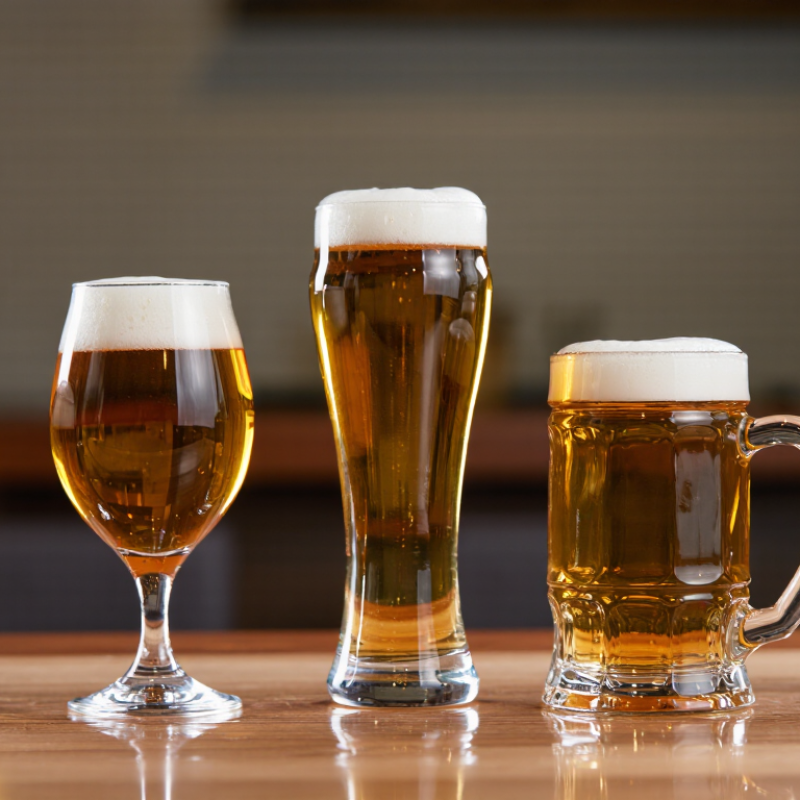
The main types include pint glasses, tulip glasses, goblets, weizen glasses, pilsner glasses, and stemmed tasting glasses. Pint glasses suit many everyday ales and lagers, although their broad use can hide differences between styles. Tulip and goblet forms support aromatic beers with rounded bowls and inward-curving rims. Weizen glasses leave room for a tall head and a yeast-rich pour. Pilsner glasses are tall and slender, making color, bubbles, and foam easier to observe. Tasting glasses are smaller and useful for controlled comparisons.

For global buyers in 2026, examine rim thickness, balance, dishwasher resistance, capacity markings, and packaging protection. Ask whether dimensions remain consistent across production batches. A beautiful shape is not enough. Some suppliers describe glassware as universal, but that claim deserves testing. Sample several pieces, inspect the foot and rim, and test them with water before ordering at scale. Purpose should guide selection, not appearance alone.

How Glass Shape Influences Beer Aroma, Flavor, and Foam

2026 Top Beer Glasses for Global Buyers?

Glass shape is a sensory tool, not a decoration. A narrow rim concentrates volatile compounds near the nose, while a wider bowl gives them more room to escape. The Brewers Association’s 2024 Draught Beer Quality Manual recommends serving beer near 38°F, or 3°C, for balanced carbonation and foam. Temperature matters, but so does headspace.

A tulip-shaped glass can hold a dense aroma above the beer. Its curved bowl also supports a lasting foam cap. A tall, narrow pilsner glass keeps the pour visually bright and directs aroma upward. Nucleated bases create continuous bubbles, helping maintain foam, although the effect depends on beer freshness and carbonation. The European Brewery Convention links foam stability with protein, hop compounds, temperature, and dissolved carbon dioxide. Shape cannot repair poor beer service.

Buyer decisions need testing. A 2023 sensory review in the Journal of the American Society of Brewing Chemists identifies glass geometry as one factor affecting aroma release and consumer perception. The evidence is useful, but not perfect. Results can shift with pouring speed, cleaning residue, and room temperature. For global purchasing, compare three shapes using the same beer, 3°C service temperature, and identical pour volume. Record aroma strength, foam retention, and drinkability. Small differences become obvious. Sometimes, the “best” glass is simply the one staff can clean consistently.

Key Materials, Sizes, Designs, and Customization Options

For global beer buyers, material choice starts with use, not appearance. Soda-lime glass remains the practical standard because it is clear, recyclable, and cost-efficient. Borosilicate glass offers stronger thermal resistance, but usually costs more. The Brewers Association counted 9,761 operating U.S. craft breweries in 2023, showing why one universal glass size rarely fits every market.

Size changes the drinking experience. A 330 ml glass suits controlled servings and tasting flights. A 500 ml vessel works better for lager service and busy hospitality settings. Tall, narrow shapes help retain carbonation, while wider bowls support aroma release. A sturdy 3 mm rim can reduce chipping, although it may feel heavier in the hand. Small details matter.

Design should follow beer style and washing conditions. A tulip bowl supports aromatic ales, while a straight-sided glass stacks efficiently in storage. The Smithers report, The Future of Global Glass Packaging to 2029, identifies food and beverage packaging as a major growth application, reinforcing demand for scalable glass production. Buyers can request embossed logos, screen printing, frosted finishes, colored glass, or retail-ready gift boxes. Customization is useful, but excessive decoration can reduce recyclability and raise inspection costs. I have seen attractive samples fail because printed marks faded after repeated washing. Request dishwasher-cycle testing, rim-impact checks, dimensional tolerances, and food-contact documentation before approving a large order. One overlooked point: samples should be tested with the actual beer, not only with water.

Safety, Quality Standards, and Sustainability for Global Markets

For global buyers in 2026, a good beer glass must do more than look clear under bright lights. It should feel balanced in the hand, stand steadily on a wet table, and suit the beer it serves. A thicker base can improve stability, while a gently tapered bowl helps retain aroma. Yet shape alone proves little. Ask suppliers for food-contact compliance documents relevant to each destination market, and check that printed decorations are tested for their intended use. Requirements vary. Keep the paperwork.

Safety checks should cover more than the glass itself. Review test reports, production-lot traceability, rim consistency, and packaging that prevents chips during shipping. If a sample arrives with uneven edges, request a closer inspection before placing a large order. One overlooked detail can become thousands of returns. Quality is rarely perfect; the useful question is how defects are found and corrected.

Tips: Compare samples with the same drink and washing routine. Ask for evidence behind recycled-content claims, since percentages and methods can differ. Durable glasses may reduce replacement needs, but heavier glass can increase transport emissions. Consider the full shipment, not just the factory’s sustainability statement. A small trial order is often wiser than a confident guess.

How to Compare Suppliers, Prices, and Shipping Options in 2026

2026 Top Beer Glasses for Global Buyers?

How to Compare Suppliers, Prices, and Shipping Options in 2026

A low unit price can hide expensive breakage, uneven printing, or delayed delivery. Compare quotes using the same glass capacity, weight, packaging, and order quantity. Ask suppliers for sample approval, carton dimensions, and documented quality checks. For a realistic comparison, calculate landed cost: product, packaging, freight, insurance, and import charges. Small details matter. A glass that feels sturdy in hand may still chip when cartons shift during transit.

Shipping performance deserves equal attention. The World Bank’s 2023 Logistics Performance Index evaluates 139 economies across areas including customs, infrastructure, shipment tracking, and delivery timeliness. Use it as a starting point, not a guarantee for a specific route. Request separate sea, air, and multimodal estimates, with transit-time ranges and shipment cut-off dates. Confirm whether quoted freight includes port handling and final delivery. I have seen buyers compare headline prices too closely; the overlooked fees can change the decision.

Tips: Request a pre-production sample and a packed-carton photo. Ask how glass is separated inside each box, and what happens when inspection finds defects. Compare at least two shipping routes. Keep a modest schedule buffer; port delays are difficult to predict. One caution: sample quality does not always reflect mass production, so agree on measurable inspection criteria before ordering.

2026 Top Beer Glasses for Global Buyers? - How to Compare Suppliers, Prices, and Shipping Options in 2026

Compare common beer-glass formats, practical sourcing considerations, and shipping methods. Price and lead-time figures below are indicative planning ranges—not live quotations—and depend on order quantity, glass weight, decoration, packaging, origin, and destination.
Glass Type Common Capacity Typical Construction Indicative MOQ Indicative FOB Price per Piece (USD) Typical Production Lead Time Key Checks for Buyers
Nonic pint glass 16 US fl oz (473 ml); 20 UK fl oz (568 ml) Clear, machine-made soda-lime glass; bulge near the rim improves handling and stacking About 1,000–3,000 pieces $0.45–$1.10 About 25–45 days Confirm the stated fill line, brim capacity, glass weight, and case-pack protection.
Shaker pint glass 16 US fl oz (473 ml) Straight-sided, machine-made glass; also commonly used as a cocktail shaker tin partner About 1,000–3,000 pieces $0.40–$1.00 About 25–45 days Check rim finish, base stability, dimensions, and whether the quoted capacity is to the brim.
Wheat beer glass About 500–700 ml Tall, flared profile; machine-made or, at higher price points, hand-finished About 1,000–3,000 pieces $0.75–$1.80 About 30–50 days Request packed samples to assess tall-glass breakage risk and carton protection.
Tulip beer glass About 300–500 ml Stemmed or stemless bowl with a narrower rim; machine-made and hand-finished options About 1,000–3,000 pieces $0.80–$2.00 About 30–55 days Compare bowl shape, stem or base strength, dimensional consistency, and packaging method.
Goblet or chalice About 300–500 ml Stemmed glass with a broad bowl; weight and finish vary by design About 1,000–3,000 pieces $0.90–$2.50 About 30–55 days Check stem alignment, glass thickness, carton inserts, and breakage terms.
Footed pilsner glass About 300–500 ml Tall, tapered bowl with a footed base; commonly machine-made About 1,000–3,000 pieces $0.70–$1.70 About 30–50 days Verify height and carton dimensions because tall, narrow shapes can affect freight and packing.
Custom-decorated glass Depends on selected glass shape Standard glass with screen-printed, decal, or other applied decoration Often 1,000–5,000 pieces, depending on the process Base-glass price plus decoration and setup charges Allow extra time for artwork approval, sampling, and decoration Confirm print area, color matching, decoration durability, food-contact suitability, and any setup or mold fees.
Shipping Options for Beer Glass Orders
Shipping Method Typical Transit Planning Range Relative Cost Best Suited For Buyer Considerations
Ocean freight, FCL Approximately 20–40 days port-to-port on many East Asia–North America or Europe lanes Usually the lowest cost per piece for full-container quantities Large, planned orders with enough volume to use a full container Allow for port handling, customs clearance, and inland delivery beyond the sailing time. Confirm pallet and carton dimensions before booking.
Ocean freight, LCL Often about 25–45 days port-to-port, depending on consolidation and route Higher per unit than FCL; destination handling charges can be significant Smaller orders that do not fill a container Glass needs strong packaging and careful palletization. Compare the complete landed-cost estimate, not just the ocean rate.
Rail freight Often about 15–25 days on some China–Europe services; route availability varies Typically between ocean and air, but route- and market-dependent Time-sensitive shipments where a suitable rail service is available Check current route availability, border handling, cargo acceptance, and final-mile arrangements.
Air freight Often about 3–8 days airport-to-airport, excluding pickup and delivery High; glass weight and chargeable volume can make it uneconomical Samples, urgent replenishment, or relatively small high-priority shipments Use protective packaging and compare chargeable weight with the value of the shipment.
International express courier Often about 2–6 business days for eligible destinations Usually the highest cost per piece Samples and very small urgent consignments Check dimensional-weight charges, import taxes, delivery coverage, and glass-breakage exclusions.
Planning note: FOB price ranges are broad estimates for standard, undecorated glassware at commercial order quantities. They exclude freight, insurance, duties, taxes, tooling, and special packaging. MOQ and production times are supplier-dependent. Obtain current written quotations, approved samples, carton specifications, and shipment terms before placing an order.

FAQS

What is the main purpose of a beer glass?

A beer glass improves presentation, aroma, foam, temperature, and how liquid reaches the tongue. It is not merely decoration.

Which glass shape suits different beer styles?

Pint glasses suit many everyday ales and lagers. Tulip and goblet shapes support aromatic beers. Weizen glasses hold tall foam. Tall pilsner glasses show color and bubbles clearly.

How does glass shape affect aroma and carbonation?

Narrow rims help retain carbonation. Wider bowls release stronger malt and hop aromas. The result also depends on pouring speed and serving temperature.

What glass materials should buyers consider?

Soda-lime glass is clear, recyclable, and cost-efficient. Borosilicate glass handles temperature changes better but usually costs more. Use matters more than appearance.

Which sizes work for different serving situations?

A 330 ml glass suits tastings and controlled servings. A 500 ml glass fits lager service and busy hospitality settings. Bigger is not always better.

What quality checks should buyers request?

Inspect rim thickness, balance, foot strength, capacity markings, and dishwasher resistance. Test samples with actual beer, not only water.

Is customization useful for beer glasses?

Embossing, printing, frosted finishes, colors, and gift boxes add visual value. Excessive decoration may increase inspection costs and reduce recyclability. Printed marks can fade.

How should buyers compare prices and shipping?

Compare capacity, weight, packaging, quantity, freight, insurance, and import charges together. Request carton photos and separate shipping estimates. Allow a modest delay buffer.

Can sample quality guarantee mass-production quality?

No. Samples may look better than later batches. Agree on measurable tolerances, defect limits, print durability, and inspection procedures before ordering. Mistakes still happen.

Conclusion

This 2026 guide to Beer Glasses explains their purpose, key types, and how the right shape can improve a beer’s aroma, flavor, carbonation, and foam presentation. It examines common styles for different beer categories, while also covering important purchasing factors such as glass materials, capacity, wall thickness, durability, appearance, and customization options. Buyers can learn how design choices influence user experience and serving performance in restaurants, hospitality businesses, retail distribution, and promotional projects.

The guide also highlights safety, quality control, food-contact suitability, sustainability, packaging, and responsible production for international markets. It provides a practical framework for comparing suppliers based on product consistency, customization capabilities, pricing transparency, minimum order quantities, lead times, shipping methods, and after-sales communication. By reviewing these factors together, global buyers can select Beer Glasses that balance presentation, performance, cost efficiency, and dependable delivery in 2026.


Sienna

Sienna

Sienna is a skilled marketing professional with a deep expertise in our company’s core products and services. With a passion for innovation and detail, she plays a pivotal role in crafting insightful blog posts that not only highlight the unique features of our offerings but also provide valuable......