For wholesale buyers, choosing China Glass Cups Sets is not just a price comparison. The right set must look consistent, feel comfortable, and arrive safely packed. A clear water glass may suit cafés, while a stemless design can fit hotel rooms and gift collections. Small details matter. Check rim smoothness, base stability, glass clarity, and how pieces sit in a carton. Ask suppliers for samples before approving a large order. A product photo cannot reveal every flaw.
Glassware sourcing specialist Daniel Mercer puts it this way: “A reliable glass set earns trust one pour, one shipment, and one inspection at a time.” Use that idea as a practical test, not a promise of perfect quality. Compare capacity, weight, finish, packaging, customization options, and lead times across suppliers. Confirm what the quoted price includes, such as inner dividers or export cartons. Request written specifications and inspect a production sample against them. These steps help buyers judge value beyond the unit cost.
Still, sourcing has rough edges. Color can vary slightly between batches, and “durable” means little without a clear testing standard. Ask direct questions, keep records, and allow time for independent checks when needed. This guide explores supplier selection, design choices, quality control, and shipping considerations for Glass Cups Sets. A careful buyer may still encounter surprises. The goal is to spot them early.
China Best Glass Cups Sets for Wholesale Buyers?
A glass cup set usually contains matching cups, but the exact pieces depend on its intended use. Tea sets may include small cups and saucers, while everyday drinkware sets often contain tumblers in one or more sizes. Some gift-oriented sets add a serving jug or a storage box. Check the packing list rather than relying on product photos.
Sets can be classified by use, capacity, shape, and glass type. Espresso cups are compact, often with handles; water tumblers are wider and easier to stack. Clear soda-lime glass suits many daily-use sets, while borosilicate glass tolerates temperature changes better when designed for that purpose. Not every cup is suitable for hot drinks. Ask suppliers for capacity measurements, rim and base dimensions, and care instructions. A sample can reveal thin edges or unstable bases that a catalogue image may hide.
Tips: Confirm whether stated capacity means brim-full or practical fill volume. Request drop-test or packaging details if transit breakage is a concern. Compare the weight of individual cups, too; a lighter set may reduce shipping costs, but can feel less substantial in hand. There is no perfect classification. Buyer preferences vary.
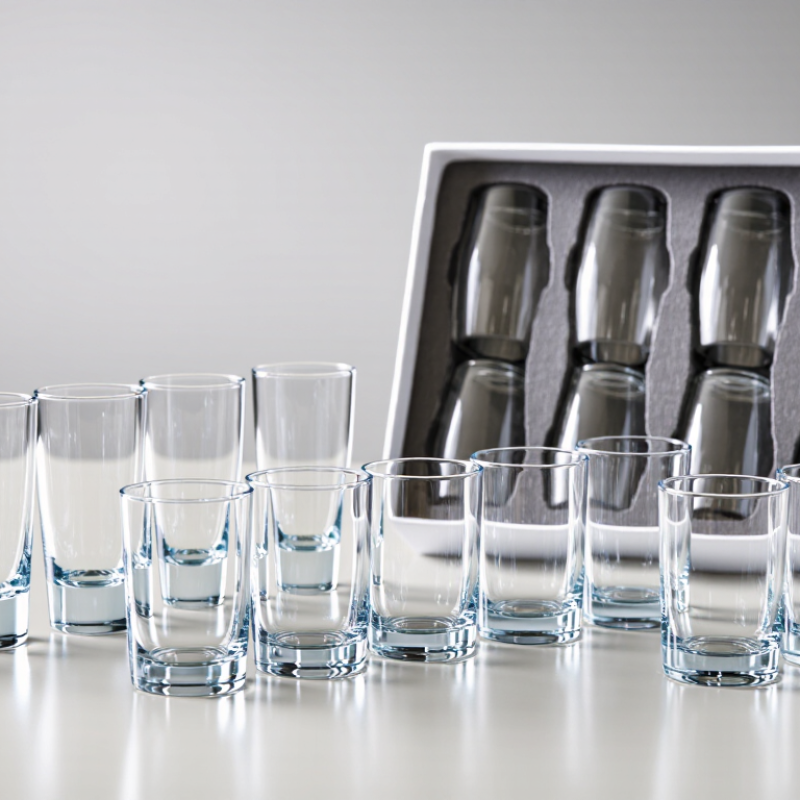
Glass cup sets are commonly classified by the number of cups in each pack. Two-, four-, six-, and eight-piece sets are typical retail configurations; exact offerings vary by supplier. The piece count shown here refers to cups, not additional accessories.
Wholesale glass cup selection starts with intended use, not appearance alone. Soda-lime glass suits everyday drinkware and often balances clarity, weight, and cost. Borosilicate glass handles temperature changes better, though it may cost more and still needs sensible care. Tempered glass can improve impact resistance, but buyers should ask suppliers for test details. Not every cup is equally sturdy.
Tips: Request samples before ordering. Check rim thickness, base stability, and carton protection. A quick wash test can reveal water spots or awkward handling.
Design and set configuration affect both shelf appeal and shipping costs. Clear straight-sided tumblers stack neatly and suit cafés, while fluted or colored cups offer a more decorative look. Sets of two or four work well for gift retail; larger sets may suit hospitality buyers. Confirm each set’s capacity, packing method, and replacement-piece availability. One easy-to-miss detail is the handle: it can look elegant but make cartons less space-efficient. I would compare packed samples, not just product photos.
China’s glass cup sets begin with a measured blend of silica sand, soda ash, and limestone. The batch melts in a furnace, then enters molds, where pressing or blowing forms each cup. Controlled annealing gradually cools the glass and reduces internal stress. Small flaws matter. A rushed cooling cycle can leave a cup vulnerable to cracking, even when its surface looks clear.
Quality checks usually cover rim smoothness, capacity, wall thickness, clarity, and visible defects such as bubbles or stones. Inspectors may also test thermal shock resistance and dishwasher durability, depending on the buyer’s specification. FEVE’s 2022 European glass-packaging data reported a collection-for-recycling rate of about 80%. That figure concerns packaging, not cup-factory performance, so it should not be mistaken for a defect-rate benchmark. One honest limitation: sample testing cannot guarantee every cup in a shipment is identical.
Tips: Ask suppliers for inspection records, agreed tolerances, and test results from the actual production batch. Check the rim under bright light and compare cup weights across several cartons. A polished sample is useful, but not enough.
China Best Glass Cups Sets for Wholesale Buyers?
Wholesale buyers should compare more than unit price. Request the glass type, capacity, dimensions, weight, rim finish, and carton quantity for every cup. Confirm whether capacity means brim-full or usable volume; a 300 ml cup can vary noticeably between suppliers. Samples reveal gaps. Check for uneven rims, bubbles, wobble on a flat table, and differences between pieces. Ask for batch-specific quality records and testing details, not only a general certificate.
Supplier comparisons should include production lead time, defect handling, replacement terms, and protective packaging. Ask how cartons are drop-tested and whether dividers prevent cups from knocking together. The U.S. EPA’s 2018 Advancing Sustainable Materials Management report estimated that 31.3% of glass containers and packaging were recycled in the United States. That figure is not a global benchmark, but it makes packaging and recycled-content questions worth including. Verify any recycled-content claim with documentation. A specification sheet can still miss real-world variation, so inspect samples from more than one production batch when possible.
Tips: Put the key dimensions and acceptable tolerances in the purchase agreement. Compare like with like: same capacity, glass type, packing method, and inspection standard. Keep one approved sample for later checks. It helps, but it cannot replace batch inspection.
Wholesale glass-cup pricing depends on capacity, glass thickness, decoration, order volume, and packing method. Ask suppliers to quote the same cup specification, including rim diameter and weight, so comparisons stay useful. A logo decal may cost less than permanent printing, but decoration can affect lead time and minimum order quantity. Request a pre-production sample. Small differences matter.
Packaging deserves its own cost line. Ask for dividers, inner cartons, and drop-test details; a cup that survives the factory floor may still chip in transit. The U.S. EPA’s 2018 materials report estimated that 31.3% of glass containers were recycled, but local collection systems differ. For shipping, UNCTAD’s Review of Maritime Transport 2024 reported maritime trade growth of 2.4% in 2023 and forecast 2.7% for 2024. That context supports early freight planning, not a guaranteed rate.
Compare port options, carton dimensions, and delivery windows, then confirm who pays for inspections or damaged goods. Leave buffer time. One awkward detail: custom colors can look different under warehouse lighting, so approve samples in daylight too.
Sets often contain matching cups. Tea sets may add saucers, while gift sets can include a jug or storage box. Check the packing list.
Buyers can compare intended use, capacity, shape, and glass type. Espresso cups are often small and handled; tumblers are wider. Not every cup suits hot drinks.
Soda-lime glass is common for everyday use. Borosilicate handles temperature changes better when designed for that purpose. Tempered glass may improve impact resistance, but ask for test details.
Ask whether the stated capacity is brim-full or practical fill volume. A 300 ml cup can vary between suppliers. Small difference, big enough to matter.
Check rim thickness, bubbles, base stability, and how cups sit on a flat table. A quick wash can reveal water spots. Photos can mislead.
Compare glass type, dimensions, weight, rim finish, carton quantity, lead time, and defect handling. Keep an approved sample for later checks, but inspect production batches too.
Ask about carton protection, dividers, and drop-test details. Handles can take more carton space. I would compare packed samples, not just product photos.
Sets of two or four may suit gift retail, while larger sets can fit hospitality needs. Clear tumblers often stack neatly; decorative shapes may use more space. There’s no perfect choice.
This article helps wholesale buyers understand how to evaluate Glass Cups Sets from Chinese suppliers. It explains what a set may include, such as matching cups, saucers, lids, or accessories, and how sets are commonly grouped by glass type, design, capacity, and number of pieces. Buyers can also learn about popular options, from clear everyday glassware to heat-resistant styles and decorative designs, and how intended use can shape the right configuration.
The guide outlines typical manufacturing and quality-checking steps, including inspections for appearance, dimensions, and durability. It also offers practical ways to compare suppliers by reviewing product specifications, sample consistency, production capacity, and communication. Finally, it covers the factors that affect wholesale pricing, customization choices, packaging protection, and shipping arrangements, helping buyers plan orders more clearly and select products suited to their market and budget.

Hengsheng