Choosing reliable Coffee Cups manufacturers in China requires more than comparing prices or browsing polished factory photos. Global buyers must examine material quality, production consistency, customization ability, packaging, and export experience. A low quotation may hide weak rims, uneven glazing, unstable printing, or excessive breakage during transport.
James Hoffmann, a respected coffee expert and author, has said, “The more you know about coffee, the more you realize you don’t know.” His observation also fits Coffee Cups sourcing. Product decisions involve more than appearance. A cup’s wall thickness affects heat retention. Its handle influences comfort. Its surface finish changes cleaning performance and brand perception.
This guide introduces ten Chinese Coffee Cups manufacturers for international buyers. The selection considers manufacturing capability, product range, quality-control practices, customization services, and communication reliability. It also looks at porcelain, ceramic, glass, stainless steel, paper, and reusable options. Some manufacturers may excel at hotelware, while others focus on promotional orders or high-volume foodservice projects.
Still, no list is permanently perfect. Factory capacity can change. Export performance may vary by season. A strong supplier for one buyer may be unsuitable for another. Samples remain essential. Buyers should request material specifications, inspection records, packaging details, and realistic production timelines before placing an order.
Small details matter.
A dependable supplier should answer clearly, disclose limitations, and support testing before mass production. By comparing these ten manufacturers carefully, global buyers can reduce avoidable risks and select Coffee Cups that perform well on shelves, café counters, and in daily customer use.
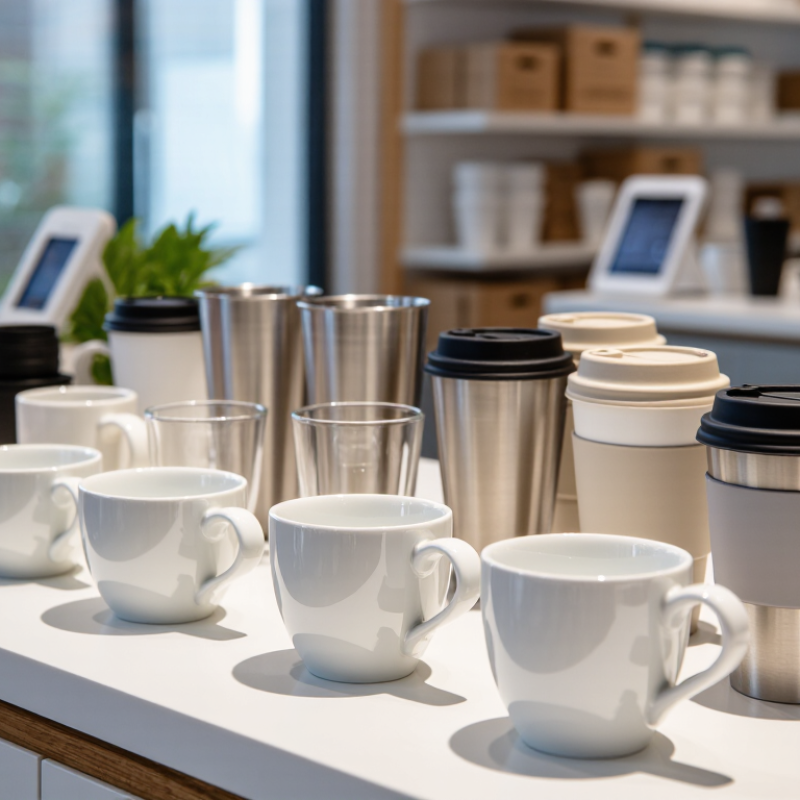
A leading coffee cup manufacturer in China offers more than attractive samples. It understands how cups perform in busy cafés, delivery boxes, and automated filling lines. Experienced teams test rim strength, leakage, heat resistance, and lid fit before mass production. They also ask practical questions about beverage temperature, storage time, and transport conditions.
Reliable production starts with controlled materials. Food-contact paper, coatings, inks, and adhesives should have clear supplier records and test documentation. A professional factory can explain its quality process without vague promises. It should provide batch traceability, production samples, inspection reports, and corrective action records. Small details matter. Poor rim sealing can ruin an entire shipment.
Communication also defines a strong manufacturer. Clear drawings, approved samples, realistic lead times, and transparent minimum order quantities reduce costly surprises. Factory visits or independent inspections can reveal material storage, machine maintenance, and worker training. A clean showroom proves little. Production discipline matters more.
No factory is perfect. Even an experienced supplier may face color variation, paper shortages, or equipment delays. What matters is how quickly it identifies the problem and shares evidence. Buyers should compare test results, not only prices. A lower quotation may hide thinner materials, weaker lids, or unstable printing. The best partnership develops through repeated sampling, honest feedback, and measurable improvements.
Choosing among China’s top coffee cup manufacturers requires more than comparing catalog photos and unit prices. A reliable supplier should provide clear material specifications, production records, and traceable quality checks. Ask whether the cup uses food-contact-safe materials and request relevant test reports. Documents alone are not enough. Inspect recent samples from the same production line, because samples can hide later process changes.
Factory experience matters when your order includes custom shapes, printing, lids, or insulation layers. Confirm the supplier’s monthly capacity, minimum order quantity, tooling fees, and realistic lead time. A capable team should explain how it controls rim thickness, handle strength, coating adhesion, and packing damage. Request a written inspection standard with measurable limits, such as leakage checks and drop-test conditions. Vague promises create expensive misunderstandings.
Communication is another practical test. Send the same technical brief to several suppliers and compare their questions. Professional teams notice details like beverage temperature, carton dimensions, barcode placement, and shipping humidity. Review their export experience, corrective-action process, and ability to support independent inspections. A low quotation once influenced my decision, but inconsistent color and delayed replacements cost more than expected. I should have tested a small production batch earlier. Buyers should also verify payment terms, contract language, and compliance requirements for each destination market before production begins. Keep records of approvals, revisions, and packing photos. Small details matter.
China’s Top 10 Coffee Cup Manufacturers for Global Buyers
China’s coffee cup manufacturing sector serves cafés, hotels, retailers, and distributors worldwide. The International Coffee Organization reported global coffee consumption of about 177.9 million 60-kilogram bags in 2023/24. That volume supports steady demand for takeaway cups, reusable tumblers, lids, and customized packaging. China’s Top 10 Coffee Cup Manufacturers for Global Buyers should therefore be judged beyond price. Buyers need to inspect forming accuracy, leakage testing, print consistency, and production capacity.
Paper remains widely used, but material choices are changing. Grand View Research valued the global paper cups market at more than USD 10 billion in 2023, with continued growth expected through the decade. In factory audits, practical details matter: cup-wall thickness, lid fit, carton strength, and moisture protection during sea transport. Ask for food-contact test reports, factory inspection records, and batch samples. A low quotation may hide higher rejection rates. I have found that “customized” sometimes means only a printed logo, not a redesigned structure.
Tips: Request three production samples, not one. Check them after twelve hours with hot liquid. Confirm paper weight, coating type, packing count, and acceptable defect limits in writing. Also compare Incoterms and lead times carefully. The cheapest supplier is not always the most reliable one. Mistakes happen, even with experienced factories. A clear inspection plan reduces unpleasant surprises.
Buyer-oriented comparison of representative Chinese coffee cup manufacturing profiles. Product capabilities, certifications, minimum order quantities, and lead times should be confirmed directly with each supplier before purchase.
| Rank | Manufacturer Profile | Core Coffee Cup Products | Main Materials | Typical Capacity Range | Customization Capability | Common Food-Contact Standards | Typical MOQ | Typical Lead Time | Best Fit for Global Buyers |
|---|---|---|---|---|---|---|---|---|---|
| 1 | Profile 01 ★★★★★ |
Double-wall paper coffee cups, ripple-wall cups, hot beverage lids | PE-coated paperboard, water-based coated paperboard, PP lids | 4 oz–20 oz | Full-color printing, custom cup sizes, lid matching, carton design | FDAEU 1935/2004LFGB | 50,000–100,000 pieces | 20–35 days after artwork approval | Chain cafés, distributors, and private-label beverage programs |
| 2 | Profile 02 ★★★★★ |
Reusable plastic tumblers, travel coffee cups, takeaway cups | PP, Tritan-style copolyester, silicone components | 8 oz–24 oz | Injection molding, logo decoration, color matching, gift packaging | BPA-free optionsFDALFGB | 1,000–3,000 pieces | 30–50 days for new molds; 15–25 days for repeat orders | Promotional campaigns, retail programs, and reusable-cup brands |
| 3 | Profile 03 ★★★★☆ |
Stainless-steel insulated coffee tumblers and vacuum bottles | 304 stainless steel, 316 stainless steel options, PP, silicone | 10 oz–30 oz | Laser engraving, screen printing, powder coating, custom lids | FDALFGBREACH | 500–1,000 pieces | 25–45 days depending on decoration | Corporate gifts, outdoor retailers, and premium drinkware ranges |
| 4 | Profile 04 ★★★★☆ |
PLA-lined paper cups, compostable lids, biodegradable beverage packaging | FSC-certified paperboard options, PLA, molded-fiber lids | 4 oz–16 oz | Water-based inks, custom printing, compostable packaging sets | FSC optionsEN 13432ASTM D6400 | 50,000–100,000 pieces | 25–40 days after design confirmation | Eco-conscious cafés, events, catering, and sustainability projects |
| 5 | Profile 05 ★★★★☆ |
Porcelain coffee cups, ceramic mugs, saucers, café tableware | Porcelain, stoneware, ceramic glaze | 6 oz–18 oz | Custom shapes, glaze colors, decals, embossing, gift boxes | FDAEU food-contactLead & cadmium testing | 1,000–3,000 pieces | 35–60 days including firing and inspection | Hotels, specialty cafés, restaurants, and hospitality suppliers |
| 6 | Profile 06 ★★★★☆ |
Glass coffee cups, double-wall glass mugs, espresso glasses | Borosilicate glass, soda-lime glass, silicone | 2 oz–16 oz | Logo printing, frosted finishes, colored glass, custom packaging | FDALFGBEU 1935/2004 | 1,000–3,000 pieces | 30–50 days | Homeware retailers, coffee equipment stores, and premium cafés |
| 7 | Profile 07 ★★★★☆ |
Paper soup and coffee cups, matching lids, sleeves, and carriers | PE-coated paperboard, kraft paperboard, molded pulp | 4 oz–32 oz | Printed sleeves, kraft appearance, multi-item takeaway sets | FDAEU food-contactFSC options | 30,000–80,000 pieces | 18–30 days for standard formats | Foodservice distributors, quick-service restaurants, and caterers |
| 8 | Profile 08 ★★★☆☆ |
Silicone collapsible cups, portable coffee mugs, travel accessories | Food-grade silicone, PP, stainless-steel inserts | 8 oz–20 oz | Custom colors, molded logos, packaging, accessory combinations | FDALFGBBPA-free options | 1,000–5,000 pieces | 30–55 days for customized production | Travel retailers, promotional merchandise, and outdoor consumers |
| 9 | Profile 09 ★★★☆☆ |
Vacuum-insulated coffee mugs, handled tumblers, commuter cups | 304 stainless steel, PP, silicone, stainless-steel lids | 12 oz–24 oz | Powder coating, engraving, color matching, retail-ready packaging | FDALFGBREACH | 500–2,000 pieces | 25–45 days | Online retailers, corporate procurement, and promotional distributors |
| 10 | Profile 10 ★★★☆☆ |
Small-batch specialty cups, sample cups, espresso cups, event drinkware | Paperboard, ceramic, glass, PP, and stainless steel | 2 oz–16 oz | Low-volume customization, mixed product sourcing, artwork support | FDA optionsEU food-contact options | 300–1,000 pieces | 20–45 days depending on product type | Start-ups, test orders, seasonal launches, and specialty coffee events |
China’s top 10 coffee cup manufacturers serve a growing global market. The International Coffee Organization reported world coffee consumption of about 177.9 million 60-kilogram bags in 2023/24, up 2.2% year on year. This growth increases demand for reliable takeaway and reusable cup suppliers.
Their product ranges often include double-wall paper cups, ceramic mugs, stainless-steel tumblers, glass cups, and travel bottles. Buyers should check lid compatibility, insulation performance, print quality, and available sizes. Customization may cover logos, colors, packaging, handles, sleeves, and retail-ready gift boxes. Many factories use digital printing for small runs and offset printing for larger orders. Some also provide injection molding, laser engraving, leak testing, and assembly services. Manufacturing evidence matters more than attractive catalogs. A factory may claim strong capacity, yet struggle with seasonal orders.
Tips: Request samples from three suppliers. Test hot liquid safety, lid fit, odor, coating adhesion, and drop resistance. Ask for production photos, inspection records, and realistic lead times. Confirm whether reported capacity reflects one workshop or several subcontractors. This detail is often unclear.
The Smithers global packaging outlook identifies sustainability and material reduction as major packaging priorities through 2028. Buyers can therefore compare recycled paper content, reusable designs, water-based inks, and packaging weight. However, greener claims need verification. Certificates, material declarations, and batch-level quality records provide stronger evidence than marketing language. A practical sourcing review should balance appearance, customization, minimum order quantity, and long-term consistency.
China Top 10 Coffee Cup Manufacturers for Global Buyers
How Global Buyers Can Select and Source the Right Manufacturer
Selecting among China’s top coffee cup manufacturers requires more than comparing online photos. Define the product before requesting quotations: ceramic, glass, stainless steel, or reusable polymer; capacity; lid fit; insulation; decoration; and packing method. A capable supplier should explain material grades, production steps, realistic tolerances, and expected lead times. Ask for recent samples from the same production line. Samples matter.
Request factory registration details, quality procedures, and food-contact test reports relevant to your destination market. Check whether reports identify the exact material and model, not a similar item. Independent inspection can review dimensions, leakage, surface defects, carton strength, and quantity before shipment. For custom cups, confirm mold ownership, artwork approval, color references, and replacement terms in writing. A low unit price may hide high minimum quantities, fragile packaging, or expensive tooling.
During supplier calls, test communication with specific questions. Can the factory trace a batch? How are rejected units recorded? Who approves a production change? Compare payment terms, shipping options, export experience, and response speed. I would not rank a manufacturer from a showroom alone. A clean display can hide weak process control. No factory is perfect. Allow a small pilot order, record defects honestly, and revise the specification before scaling. This slower step often protects margins and customer trust better than chasing the lowest quote.
It should test rim strength, leakage, heat resistance, and lid fit. Busy cafés expose weak designs quickly.
Request supplier records and test reports for food-contact paper, coatings, inks, and adhesives. Clear records support safer decisions.
Traceability connects materials, production dates, inspections, and corrective actions. It helps locate problems quickly.
Visit the production area or arrange an independent inspection. Check material storage, machine maintenance, and worker training. A clean showroom proves little.
Confirm beverage temperature, storage time, transport conditions, carton size, barcode placement, and shipping humidity. Small details matter.
Compare material thickness, lid strength, printing stability, test results, and packing quality. The cheapest offer may cost more later.
Ask for capacity, minimum order quantity, tooling fees, lead time, inspection standards, and packing photos. Written limits reduce misunderstandings.
Earlier samples may not reflect later process changes. Recent samples reveal actual materials, colors, sealing, and printing quality. Samples can mislead.
Strong teams ask about temperature, carton dimensions, transport, and delivery requirements. They also provide clear drawings and realistic schedules.
The supplier should identify the issue, share evidence, and propose measurable corrections. Buyers should keep approval records and review replacement timing. Problems happen. Reflex matters.
This article presents a practical guide to China’s top 10 coffee cup manufacturers for global buyers. It explains what distinguishes a leading supplier, including consistent product quality, advanced production equipment, reliable supply capacity, food-contact safety, responsive communication, and professional quality control. Buyers will also learn how to evaluate Chinese Coffee Cups suppliers based on certifications, material selection, production experience, minimum order quantities, lead times, pricing, and export support.
The article reviews typical product ranges, such as paper, plastic, reusable, insulated, and specialty coffee cups, while highlighting customization options including sizes, lids, colors, packaging, and printed designs. It also outlines how manufacturers support private-label and bulk orders through flexible production capabilities. Finally, global buyers are guided through the sourcing process, from comparing quotations and requesting samples to verifying factory capabilities, confirming specifications, negotiating terms, and building a dependable long-term supply relationship.

Hengsheng