Choosing the right Liquor Glass Bottle involves more than appearance. Global buyers must balance product protection, brand identity, filling efficiency, shipping weight, and regional requirements.
This guide examines ten widely used bottle types, including round, square, rectangular, flask, decanter, miniature, and custom-molded designs. Each shape creates a different impression on the shelf. A heavy base can suggest quality. A narrow neck may support controlled pouring. However, heavier glass also increases freight costs and handling demands. Beautiful is not always practical.
Adeline Farrelly, Secretary General of the European Container Glass Federation (FEVE), has stated, “Glass is the only packaging material that is 100% and endlessly recyclable.” Her observation highlights an important advantage of glass packaging, but recycling performance still depends on collection systems and local infrastructure. Buyers should verify those conditions before making broad sustainability claims.
Our comparison focuses on real purchasing decisions. It considers capacity, wall thickness, closure compatibility, mold flexibility, pallet stability, decoration options, and minimum order quantities. It also addresses common quality concerns, such as air bubbles, uneven color, weak rims, and inconsistent dimensions. These details can affect filling lines and customer perception.
There is no universal best bottle.
A premium decanter may suit a limited edition, while a lightweight round bottle may work better for high-volume distribution. Some recommendations may require adjustment after testing. Sample approval, drop testing, and supplier audits remain essential. This overview gives global buyers a practical starting point for selecting a Liquor Glass Bottle with greater confidence, fewer surprises, and a clearer view of long-term value.
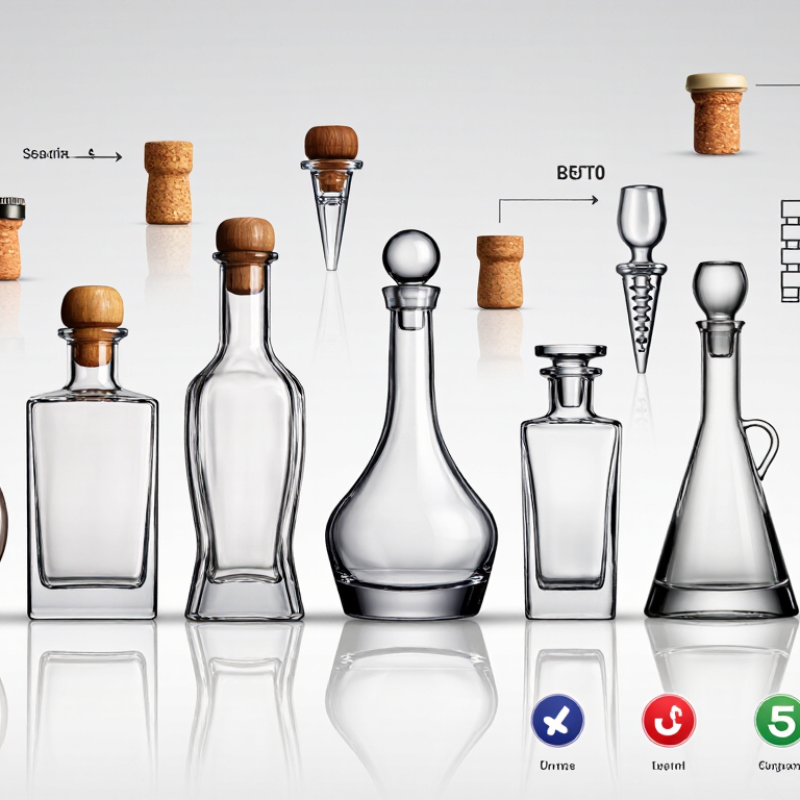
Top 10 liquor glass bottle types often differ more in silhouette than purpose: straight-sided, round-shouldered, square, flask-shaped, tapered, long-necked, wide-mouth, decanter-style, miniature, and apothecary-inspired designs. Straight sides suit simple labels and efficient packing. Rounded shoulders create a softer profile, while square bottles can sit neatly together on a shelf. Flask shapes feel compact in the hand. Decanter styles add visual weight, but may be heavier to ship.
Glass choice matters as much as shape. Clear glass shows a spirit’s color; amber or green glass reduces light exposure, though neither replaces suitable storage. Flint glass offers a clean, bright appearance, while recycled-content glass can support material-reduction goals when supply and quality are verified. Buyers should check wall thickness, closure fit, fill volume, and case-pack dimensions with physical samples. A bottle that looks premium on a screen may feel awkward in a wet hand. That detail is easy to miss.
Tips: Test filled samples, not empty ones. Check pouring control, label adhesion, and breakage during handling. Local preferences vary, so avoid assuming one silhouette works everywhere. Even careful testing has limits; transport conditions can still reveal weak points.
| Bottle Type | Shape and Key Features | Common Capacities | Typical Glass and Color | Common Uses | Buyer Considerations |
|---|---|---|---|---|---|
| 1. Round Shoulder Bottle | Cylindrical body with gently sloping shoulders and a relatively narrow neck. | Commonly 500 ml, 700 ml, and 750 ml | Soda-lime glass; clear, amber, or green | Whisky, rum, vodka, gin, and other distilled spirits | Widely compatible with standard closures and labeling equipment; check neck finish and case dimensions. |
| 2. Square Bottle | Four-sided body with flat panels, often with defined edges and a compact footprint. | Commonly 500 ml, 700 ml, and 750 ml | Soda-lime glass; usually clear, sometimes colored | Premium spirits, vodka, gin, and gift-oriented packaging | Flat faces provide useful label space; heavier or thick-walled versions may increase shipping weight. |
| 3. Rectangular Bottle | Broad front and back panels with a slim side profile; may have rounded or squared corners. | Commonly 500 ml, 700 ml, and 750 ml | Soda-lime glass; commonly clear or amber | Whisky, brandy, rum, and spirits designed for shelf display | Efficient use of shelf space; confirm panel dimensions, bottle stability, and packing orientation. |
| 4. Flask Bottle | Flattened, rounded body inspired by pocket flasks, generally with a short neck. | Commonly 200 ml, 375 ml, and 500 ml | Soda-lime glass; clear, amber, or green | Whisky, rum, liqueurs, and portable or gift-size presentations | Check the base design and center of gravity to ensure stable standing and suitable shipping protection. |
| 5. Decanter-Style Bottle | Decorative silhouette that may feature a broad body, sculpted shoulders, or a stopper-style closure. | Commonly 500 ml, 700 ml, and 750 ml | Often clear soda-lime glass; colored glass is also available | Premium spirits, aged spirits, and gift or hospitality packaging | Confirm whether the stopper is included, the closure fit, and the added weight of decorative glass. |
| 6. Long-Neck Bottle | Tall, narrow neck above a straight-sided or gently tapered body. | Commonly 200 ml, 500 ml, 700 ml, and 750 ml | Soda-lime glass; clear, amber, or green | Gin, vodka, liqueurs, and selected ready-to-serve spirits | Neck length affects closure selection, filling-line handling, and carton height. |
| 7. Wide-Shoulder Bottle | Broad shoulders transition from the neck to a substantial body, creating a strong visual profile. | Commonly 500 ml, 700 ml, and 750 ml | Soda-lime glass; often clear, amber, or green | Whisky, rum, tequila, and other mainstream spirits | Evaluate shoulder clearance on filling and labeling lines, as well as bottle-to-bottle spacing. |
| 8. Miniature Bottle | Small-format version of a standard spirit bottle, made in a range of body shapes. | Commonly 20 ml, 30 ml, 50 ml, and 100 ml | Soda-lime glass; clear or colored | Sampling, travel retail, hotel service, and gift assortments | Small bottles need suitable closures and protective secondary packaging; local rules may govern sale sizes. |
| 9. Heavy-Base Bottle | Standard or custom body shape with a noticeably thick glass base. | Commonly 500 ml, 700 ml, and 750 ml | Usually clear soda-lime glass; other colors are possible | Premium whisky, vodka, gin, and gift packaging | Consider added glass weight, freight cost, pallet load, and compatibility with filling-line equipment. |
| 10. Tapered Bottle | Body narrows or widens gradually from base to shoulder, with a distinctive angled profile. | Commonly 500 ml, 700 ml, and 750 ml | Soda-lime glass; commonly clear, amber, or green | Tequila, rum, liqueurs, and spirits seeking a distinctive shelf shape | Check base stability, label placement on curved surfaces, and the space required in cartons and cases. |
Capacities, glass colors, and designs are common market options rather than fixed specifications. Confirm the applicable neck finish, closure, dimensions, and food-contact requirements with the supplier before ordering.
Rounded bottles with sloped shoulders feel familiar and pour comfortably. They suit home bars and regular handling.
Square bottles use shelf space efficiently and sit steadily in cartons. Their straight sides can also support smoother packing.
Stable bases, straight sides, and consistent neck dimensions support reliable movement and closure placement. Small variations can still cause problems.
Compare glass weight with handling, shipping, and presentation needs. Heavy glass feels substantial, but it can increase transport demands.
Request dimensional drawings and production samples. Test the bottle with the intended closure and filling equipment.
No. A hand inspection helps, but line testing reveals tipping, filling, and packing issues more clearly.
Deep embossing, a custom heel, or a distinctive stopper can improve recognition. Decoration should not reduce grip or packing efficiency.
Include flat, readable areas for labels. A curved surface may look elegant but can create alignment problems.
Glass color can change how the liquid appears. Test samples under bright store lighting before approving the design.
Not necessarily. A striking shape may feel awkward, tip easily, or waste carton space. A plain bottle can sometimes perform better.
This guide explores how liquor glass bottle shapes, materials, and capacities influence function, appearance, and suitability for different markets. It introduces familiar formats used for everyday spirits and efficient large-scale production, then compares distinctive designs that help premium whiskies, vodkas, and other spirits express a clear visual identity. Compact bottles, specialty shapes, and gift-ready formats are also considered for buyers seeking options beyond standard packaging.
For global purchasing decisions, the guide outlines practical factors such as glass clarity and strength, closure compatibility, consistent dimensions, packaging protection, and production cost. It also highlights the importance of checking relevant quality and compliance requirements for each destination market, while balancing visual appeal with shipping and storage needs. Together, these considerations help buyers select bottle styles that fit their product, production plans, and customer expectations.

 Hengsheng